History: The Assumption Readers Bring to Pilates
Readers come to pilates and women-only gyms with assumptions, and some do not hold up against the published record. This page takes one assumption about pilates and sets out what the evidence shows. It also says what that changes about what to look for on a visit. The assumption belongs to readers, not to us. We have not held it and later given it up.
Who checks the claim, and how
This page is written by the editors of Locker Key, a neighborhood newsletter. Our judgment rests on what we read, check and compare, not on years in the trade. A belief about a kind of exercise is a claim about the world. So we hold it to the same test as any other: what does the published record say? We check the record rather than the reputation of any studio. Where the record is thin, we say so in the text.
Checking the claim against the record
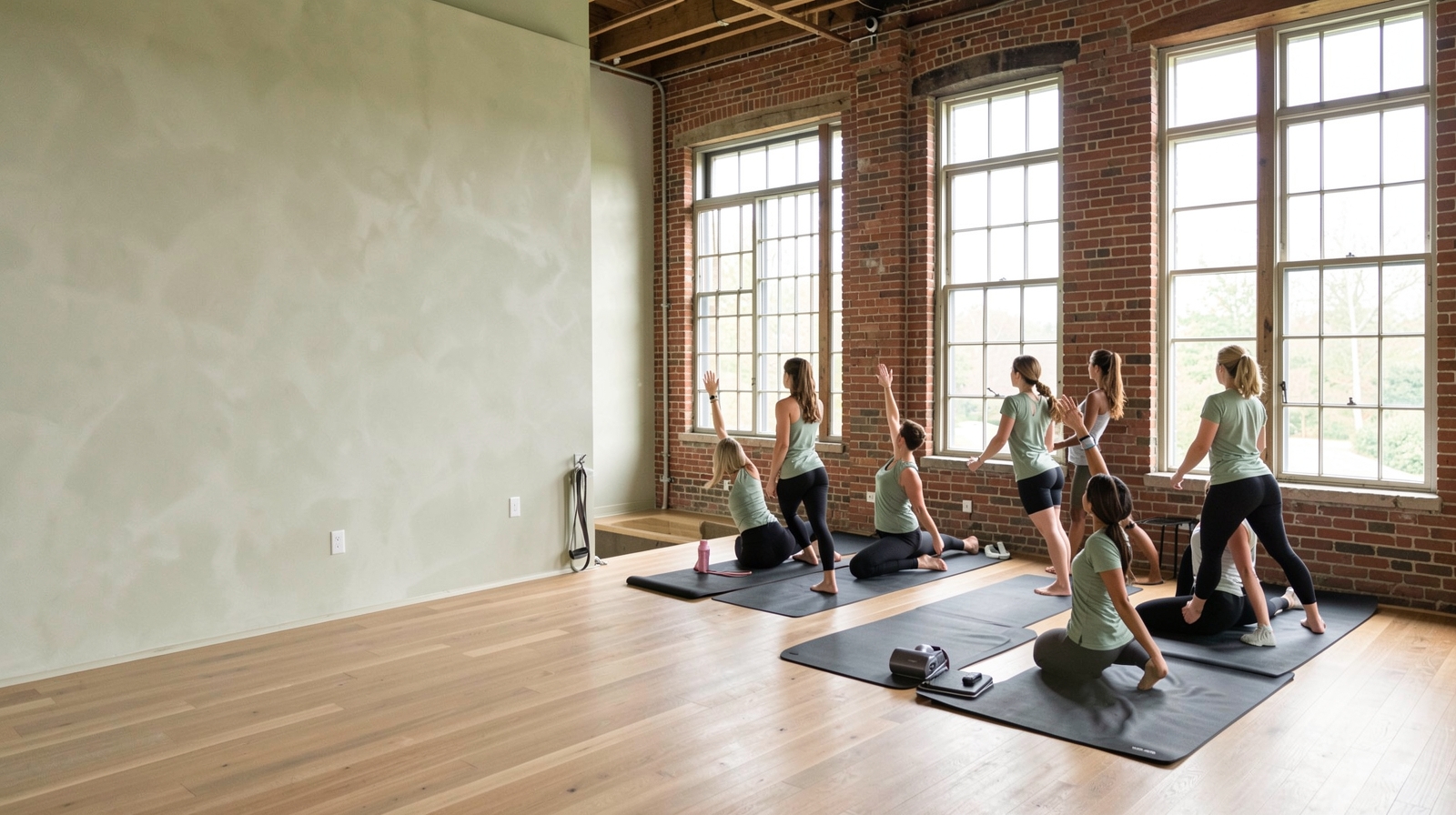
The pictures below are generated for this site and show a setting, not evidence. The evidence sits in the figures and sources further down. Each figure on this page is taken from a published source named beside it. Nothing here is a count of members, classes or visits. The numbers were chosen because they change what a reader should ask.

The numbers behind the belief
Four figures frame the belief. The first two come from Massachusetts law on health club contracts, which shows how far a membership can bind a buyer. The third is federal guidance on weekly activity, which shows how much a membership has to cover. The fourth is a 2015 systematic review of Pilates for back pain. Each is named with its source so you can check it yourself.
- 3 business days
- How long a Massachusetts health club buyer has to cancel a contract after receiving it, under General Laws, chapter 93, section 81.
- 36 months
- The longest term a Massachusetts health club contract may run, under General Laws, chapter 93, section 80.
- 150 minutes
- The weekly moderate activity the Centers for Disease Control and Prevention recommends for adults, a yardstick for how many sessions a membership needs to cover.
- 510 patients
- Across 10 studies in the 2015 Cochrane review of Pilates for chronic low back pain. The review covers back pain, not general fitness.
For the questions to put to a studio on a visit, see the Resources page. That page sets out the formats side by side and the questions that follow from them. This page answers only one assumption, so the rest of the decision sits there. Read it before you book a trial class. The reader leaves with a choice of format rather than a verdict on any studio.